
- Individuals & Families
- Businesses
- Agents & Brokers
- Embedded Insurance

Because pets are family, Chubb now offers pet insurance with top-rated coverage from Healthy Paws.

Chubb offers the insurance protection you need for travel’s many “what ifs”.

Chubb protects small businesses at every stage – from newly formed start-ups to long-time anchors of the community.

Stay ahead of cyber threats with our free Cyber Claims Landscape Report.

Learn more about our dedicated learning paths, Online Learning Center, and more.



Many digital-savvy consumers look for it as a core or add-on option.
Many digital-savvy consumers look for it as a core or add-on option.
Many digital-savvy consumers look for it as a core or add-on option.

Chubb’s in-house technology makes it easy to integrate what we do into your customer experience.
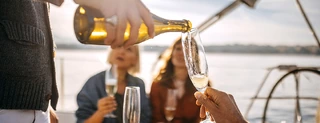
For many collectors, fine wine and rare spirits are an essential part of life on board. A carefully chosen vintage shared with guests at anchor or a rare bottle opened during an evening at sea adds to the experience of travel and hospitality that defines yacht ownership.
Unlike many other collectibles, wine is a living asset. Its character evolves over time and is highly sensitive to its environment. Rare spirits, while more stable, are often prized for their scarcity, provenance, and bottle condition. On a yacht, factors such as motion, temperature fluctuations, sunlight, and severe weather introduce considerations that differ significantly from those in a traditional cellar or home bar.
With thoughtful planning and the right storage approach, collectors can enjoy their bottles on board while preserving both their quality and value.
Creating the Right Onboard Environment
Temperature stability is the most important factor in protecting a wine collection. Fine wines are ideally stored at a stable temperature of approximately 55 degrees Fahrenheit. Even brief periods of elevated heat can accelerate aging and alter flavor profiles.
A yacht’s environment presents unique challenges. Engine rooms, sun exposed decks, and rapidly changing climates between ports can introduce temperature swings that would not occur in a residential cellar.
Collectors should consider:
- Installing marine grade wine refrigeration systems designed to maintain stable temperatures while underway. Install a temperature sensor to alert you if the temperature fluctuates outside of a set range so any mechanical issues can be addressed immediately. To minimize fluctuations in temperature and humidity, instruct the crew and guests to always keep doors closed when not in use.
- Additionally, if you plan on traveling with fine wine or spirits, make sure there is a backup power source aboard the ship on the off chance the main generator malfunctions.
- Storing bottles off the floor and away from engine rooms, galleys, exterior bulkheads, and direct sunlight.
- Maintaining optimal relative humidity levels (ideally between 60-65%) to preserve cork integrity and prevent mold growth on wine labels.
- Avoiding frequent relocation of bottles between temperature zones during voyages.
Spirits such as whiskey and bourbon are generally more resilient than wine. However, prolonged heat exposure can weaken corks, compromise wax seals, and increase evaporation over time.
Managing Motion and Vibration at Sea
Unlike a traditional cellar, a yacht is constantly in motion. Over time, vibration can disturb sediment in aged wines and influence the maturation process.
To reduce these risks:
- Install secure racking systems designed specifically for marine environments.
- Ensure bottles are stored snugly but not overcrowded to prevent shifting. Bottle leashes or retentions straps are great options to help maintain security
- During extended voyages or rough seas, consider relocating especially valuable bottles to the most stable areas of the vessel.
- Avoid placing wine storage near machinery or appliances that generate consistent vibration.
Rare spirits are less sensitive to vibration, but bottles should still be secured to prevent breakage or damage while underway.
Considerations for Fine Wine
Fine wine requires particular care due to its sensitivity to temperature, vibration, and light.
Best practices include:
- Storing bottles on their sides to keep corks moist and prevent air intrusion.
- Protecting bottles from ultraviolet light, which can prematurely age wine and degrade labels.
- Limiting exposure to heat during long itineraries through warm climates.
- Monitoring sediment in older bottles and minimizing unnecessary movement.
- Limiting access when in port, as fine wine collections can represent significant value.
Collectors should also be mindful of label condition, which contributes significantly to the value of collectible wine. Excess humidity, direct sunlight, or abrasion from improper storage can damage labels and reduce a bottle’s market appeal. Storing bottles securely and away from moisture or excessive handling helps preserve both the wine itself and the integrity of the label.
Considerations for Rare Whiskey and Bourbon
Rare spirits, particularly collectible whiskey and bourbon, present a different set of priorities.
Unlike wine, spirits should be stored upright to prevent high proof alcohol from degrading corks over time. Collectors should also consider:
- Protecting bottles from prolonged heat, which can accelerate evaporation and alter seal integrity.
- Avoiding direct sunlight, which can fade labels and affect collectible value.
- Securing bottles in locking cabinetry or reinforced storage to prevent movement while underway.
- Limiting access when in port, as rare whiskey collections, like fine wine collections, can hold considerable value.
While the liquid itself is relatively stable, preserving bottle condition and label integrity remains important for collectors.
Planning for Voyages and Severe Weather
Fine wine and rare spirits should be considered as part of broader onboard risk planning, particularly during hurricane season or extended voyages.
Collectors may wish to:
- Maintain a detailed inventory of bottles, including producer, vintage, and acquisition information.
- Photograph particularly valuable bottles and storage areas prior to departure.
- Identify which bottles should remain onboard and which may be better stored ashore during storm seasons or extended lay ups.
- Establish relationships with climate-controlled storage facilities or specialty shippers in key ports should relocation become necessary.
Including wine and spirits in voyage preparation helps ensure collections remain protected regardless of conditions.
Enjoying a Collection at Sea
Ultimately, wine and spirits are meant to be experienced. A thoughtfully stored collection allows collectors to enjoy rare bottles with confidence, whether hosting guests on deck or opening a special vintage during a quiet evening at anchor.
With careful attention to temperature stability, motion management, light exposure, and voyage planning, collectors can preserve both the integrity and enjoyment of their bottles while navigating life at sea.
Insights and expertise







This document is advisory in nature and is offered as a resource to be used together with your professional insurance advisors in maintaining a loss prevention program. It is an overview only, and is not intended as a substitute for consultation with your insurance broker, or for legal, engineering or other professional advice.
Chubb is the marketing name used to refer to subsidiaries of Chubb Limited providing insurance and related services. For a list of these subsidiaries, please visit our website at www.chubb.com. Insurance provided by ACE American Insurance Company and its U.S. based Chubb underwriting company affiliates. All products may not be available in all states. This communication contains product summaries only. Coverage is subject to the language of the policies as actually issued. Surplus lines insurance sold only through licensed surplus lines producers. Chubb, 202 Hall's Mill Road, Whitehouse Station, NJ 08889-1600.