
- Individuals & Families
- Businesses
- Agents & Brokers
- Embedded Insurance

Protect your ring with Chubb Valuable Articles insurance and get the peace of mind and financial security you need.

Because pets are family, Chubb now offers pet insurance with top-rated coverage from Healthy Paws.

Chubb offers the insurance protection you need for travel’s many “what ifs”.

Recognized for Outstanding Customer Satisfaction among Small Business Insurers and ranked #1 in Digital Channels.

Stay ahead of cyber threats with our free Cyber Claims Landscape Report.

Learn more about our dedicated learning paths, Online Learning Center, and more.



Many digital-savvy consumers look for it as a core or add-on option.
Many digital-savvy consumers look for it as a core or add-on option.
Many digital-savvy consumers look for it as a core or add-on option.

Chubb’s in-house technology makes it easy to integrate what we do into your customer experience.

Frozen pipes are one of the most common and costly winter problems homeowners face. When water inside a pipe freezes, it expands and can cause the pipe to burst without warning, leading to thousands of dollars in damage and disruption to your home and daily life. Knowing how to prevent pipes from freezing is one of the simplest ways to protect your home this winter. If you want to make sure your home is covered, learn more about homeowners insurance from Chubb.
How do frozen pipes lead to property damage?
When water freezes inside a pipe, it expands and creates pressure that can cause the pipe to rupture. The ensuing water can cause major damage to walls, floors, ceilings, drywall, structural components, electrical systems, and other property, including personal effects and contents, such as furniture, clothing, electronics, and other household belongings. Frozen pipes can trigger costly repairs that go well beyond the pipe itself, making prevention far simpler than recovery.
At what temperature do pipes freeze?
Pipes can begin to freeze when the temperature outside drops to 32°F or below. In practice, pipes are most at risk when temperatures fall below 20°F for an extended period, particularly in unheated, poorly insulated, or drafty areas of your home where cold air can reach pipes more easily.
What areas are at the highest risk?
Some parts of your home are more vulnerable than others. Pipes in and adjacent to the following areas are most likely to freeze:
- Basements and crawl spaces, especially those that are unheated or poorly sealed
- Attics, where insulation may be thin or absent near pipe runs
- Garages, particularly if they are unheated
- Under sinks, where cabinet doors can block warm air from reaching pipes
- Outside walls, where pipes are closest to cold outdoor air
- Drafty spots, near windows, foundation cracks, or the sill plate and rim board along the top of the foundation
How to prevent frozen pipes
When the temperature falls to 32°F or below, a few straightforward steps can go a long way toward keeping your pipes intact and your home dry.
1. Keep your thermostat at a consistent temperature
Set all your thermostats to at least 55°F throughout winter — day and night. If you have a guest house, pool house, or a home with multiple heating zones, each zone should stay at a minimum of 55°F. Consistent heat is what keeps your pipes from freezing in the first place. For buildings not used during winter, turn off the water supply and have your plumbing contractor drain the pipes.
2. Add insulation
Pipes in and near outside walls or unheated areas of your home are vulnerable. Adding insulation for these areas and adding pipe insulation is an easy, affordable prevention measure for garages, crawlspaces, and other unheated spaces. You can also use plumbing heat tape or cables for vulnerable locations that are more exposed to freezing temperatures. Good insulation also helps improve energy efficiency, so be sure to seal any areas where cold air may enter and consider checking whether your state offers a free energy audit program to identify where your home may benefit.
3. Use smart technology to monitor your home
Technology can help you catch a problem before it becomes a disaster. Consider adding:
- Low temperature sensors that alert your monitored alarm system when temperatures approach freezing
- Smart thermostats you can monitor and adjust from anywhere, including when you're away
- Permanent backup generators that automatically keep your heating system running during a power outage
- Water leak detection systems that automatically shut off your water supply if a leak is detected
4. Disconnect hoses and protect outside spigots
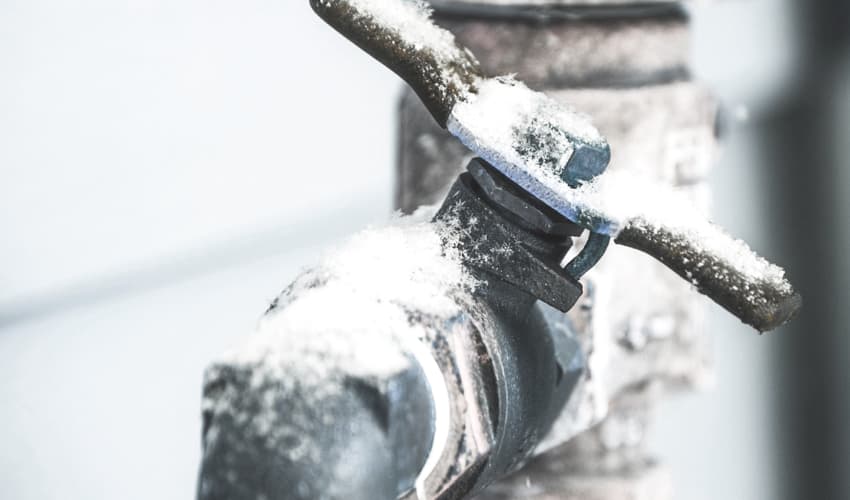
Before temperatures drop, disconnect and store all garden hoses. Cover your spigots with faucet insulators. These are inexpensive and simple to install covers that help keep cold air out. If you don't have frost-proof spigots, turn off the interior valves and drain the lines to the outside faucets.
5. Protect pipes in vulnerable areas
Open cabinet doors under sinks to let warm air reach the pipes behind the cabinet walls. During especially cold and windy conditions, let both hot and cold water drip slightly from faucets in areas that are more exposed to the cold to help keep water moving through the pipes.
Protecting your home during winter travel
Planning to be away from home during the colder months? A few steps before you leave can protect your property while you're gone.
- Keep the heat on. Set your thermostat to at least 55°F before you leave, and consider setting it higher in especially cold, windy, or drafty conditions — particularly if your home is older and not as well insulated.
- Shut off your water main to keep water where it belongs. If you're heading out for an extended period or closing up a secondary property, there are steps you can take to help protect it from water damage. The first is to shut off your main water supply, which is a simple and effective step. You can go a step further and drain the pipes entirely.
What to do if you think your pipes are frozen
If you turn on a faucet and get only a trickle — or nothing at all — your pipes may already be frozen. Stay calm. Here's what to do:
- Keep the faucet open. Run both cold and hot water through the faucet. The flow of water helps relieve pressure and gradually thaws the pipe from the inside out.
- Use a safe heat source. A hair dryer, heating pad, or portable space heater placed near the pipe can help. Never use an open flame like a blow torch. Open flames pose a serious fire risk and can cause damage to your pipes.
- Work from the faucet end toward the wall. Start heating near the faucet and work back toward the frozen section so melting water has somewhere to drain.
If you can't locate the frozen section or the pipe has already burst, shutoff the water supply and call a licensed plumber as soon as possible.
Your home is worth protecting — and the good news is that most damage from frozen pipes can be prevented with the right preparation.
Prevent electrical fires in your home
Emergency evacuation packing list

How to keep your home cool in the summer
7 tips for creating your family disaster plan
This document is advisory in nature and is offered as a resource to be used together with your professional insurance advisors in maintaining a loss prevention program. It is an overview only, and is not intended as a substitute for consultation with your insurance broker, or for legal, engineering or other professional advice.
Chubb is the marketing name used to refer to subsidiaries of Chubb Limited providing insurance and related services. For a list of these subsidiaries, please visit our website at www.chubb.com. Insurance provided by ACE American Insurance Company and its U.S. based Chubb underwriting company affiliates. All products may not be available in all states. This communication contains product summaries only. Coverage is subject to the language of the policies as actually issued. Surplus lines insurance sold only through licensed surplus lines producers. Chubb, 202 Hall's Mill Road, Whitehouse Station, NJ 08889-1600.