
- Individuals & Families
- Businesses
- Agents & Brokers
- Embedded Insurance

Protect your ring with Chubb Valuable Articles insurance and get the peace of mind and financial security you need.

Because pets are family, Chubb now offers pet insurance with top-rated coverage from Healthy Paws.

Chubb offers the insurance protection you need for travel’s many “what ifs”.

Chubb protects small businesses at every stage – from newly formed start-ups to long-time anchors of the community.

Stay ahead of cyber threats with our free Cyber Claims Landscape Report.

Learn more about our dedicated learning paths, Online Learning Center, and more.



Many digital-savvy consumers look for it as a core or add-on option.
Many digital-savvy consumers look for it as a core or add-on option.
Many digital-savvy consumers look for it as a core or add-on option.

Chubb’s in-house technology makes it easy to integrate what we do into your customer experience.
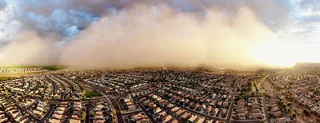
Dust storms are common in desert locations, especially in the American Southwest. These storms can range from small, localized events to large-scale occurrences that settle over entire cities, reducing visibility, potentially damaging property, and impacting air quality.
While dust storms are a natural part of life in desert climates, they can pose significant risks to homes, especially to heating, ventilation, and air conditioning (HVAC) systems, if proper precautions aren’t taken.
What are dust storms?
Dust storms occur when strong winds lift loose soil and sand into the air, creating a dense cloud of particles that can travel for miles and reach thousands of feet into the air. These storms are often triggered by thunderstorms, high winds, or seasonal weather patterns. Larger, more intense dust storms are called haboobs.
Where do dust storms occur?
In the U.S., dust storms most frequently occur in Arizona, New Mexico, and parts of west Texas during the summer monsoon season, which runs from June 15 to September 30, as designated by the National Weather Service (NWS). Dust storms also arise in other states, including California, Nevada, Utah, and though rare, in the Midwest.
The NWS issues Dust Storm Warnings when visibility is equal to, or less than, a quarter mile; these are typically issued during larger haboobs.1
The impact of dust storms
Dust storms can have significant consequences for health, safety, and property. Here are key risks to be aware of:
- Health risks
- Dust storms can irritate the respiratory system, especially for individuals with asthma or other lung conditions.
- Prolonged exposure to airborne dust can lead to skin and eye irritation.
- Travel hazards
- Visibility during dust storms can drop to near zero, creating dangerous driving conditions.
- Sudden and strong wind gusts can make it difficult to maintain control of vehicles.
- Property damage
- Dust and debris from dust storms can damage electronics, clog HVAC systems, and reduce indoor air quality.
- Outdoor structures, such as fences and awnings, may also sustain damage from high winds and flying debris.
Tips for protecting your home and HVAC system
One of the most vulnerable parts of your home during a dust storm is your HVAC system. Dust and debris can clog filters, reduce efficiency, and even cause long-term damage. Here are best practices to protect your HVAC system and maintain indoor air quality:
- Seal your home
- Inspect windows, doors, and vents for gaps or cracks where dust can enter.
- Use weatherstripping or caulk to seal openings.
- Install high-quality air filters
- Use HEPA (High-Efficiency Particulate Air) filters in your HVAC system to trap fine dust particles.
- Check and replace filters regularly, especially after a dust storm.
- Turn off your HVAC system
- Turn off your HVAC system to prevent dust from being pulled into the system during dust storms.
- Close all windows and doors to minimize dust infiltration.
- Schedule regular maintenance
- Have your HVAC system inspected and cleaned by a professional at least once a year.
- After a dust storm, schedule an inspection with a licensed HVAC contractor to ensure your system is functioning properly.
- Use an air purifier
- Use an air purifier with a HEPA filter to improve indoor air quality.
- Protect outdoor HVAC units
- Cover your outdoor HVAC unit with a breathable cover to prevent dust accumulation.
- Clear the area around the unit of loose debris, such as leaves and branches, that could be blown into the system.
Staying safe during dust storms
In addition to protecting your home, it’s important to prioritize personal safety during dust storms:2
- Stay indoors
- Avoid going outside during a dust storm, as visibility can drop rapidly and airborne particles can pose health risks.
- Pull over if driving
- If you’re driving, pull over to the side of the road and wait for the dust storm to pass.
- Wear protective gear
- If you are outside, wear a face mask or respirator to filter out dust particles and goggles to protect your eyes.
By taking steps to protect your home, maintain indoor air quality, and prioritize personal safety, you can reduce the impact of these storms and ensure a safer environment for yourself and your family. With preparation and vigilance, you can weather these events more effectively and safeguard both your home and well-being.
Insights and expertise
13 essential hurricane preparedness tips

A guide to homeowners insurance for older or historic homes
Emergency evacuation packing list

How to keep your home cool in the summer
This document is advisory in nature and is offered as a resource to be used together with your professional insurance advisors in maintaining a loss prevention program. It is an overview only, and is not intended as a substitute for consultation with your insurance broker, or for legal, engineering or other professional advice.
Chubb is the marketing name used to refer to subsidiaries of Chubb Limited providing insurance and related services. For a list of these subsidiaries, please visit our website at www.chubb.com. Insurance provided by ACE American Insurance Company and its U.S. based Chubb underwriting company affiliates. All products may not be available in all states. This communication contains product summaries only. Coverage is subject to the language of the policies as actually issued. Surplus lines insurance sold only through licensed surplus lines producers. Chubb, 202 Hall's Mill Road, Whitehouse Station, NJ 08889-1600.