
- Individuals & Families
- Businesses
- Agents & Brokers
- Embedded Insurance

Protect your ring with Chubb Valuable Articles insurance and get the peace of mind and financial security you need.

Because pets are family, Chubb now offers pet insurance with top-rated coverage from Healthy Paws.

Chubb offers the insurance protection you need for travel’s many “what ifs”.

Chubb protects small businesses at every stage – from newly formed start-ups to long-time anchors of the community.

Stay ahead of cyber threats with our free Cyber Claims Landscape Report.

Learn more about our dedicated learning paths, Online Learning Center, and more.



Many digital-savvy consumers look for it as a core or add-on option.
Many digital-savvy consumers look for it as a core or add-on option.
Many digital-savvy consumers look for it as a core or add-on option.

Chubb’s in-house technology makes it easy to integrate what we do into your customer experience.
How Next-Gen Collectors Are Redefining the Wine and Spirits Market

At a glance
While global wine demand has reached a 27-year low,1 and overall alcohol consumption among younger generations is declining, premium wine and spirits continue to attract younger consumers. This is especially true of spirits, which are experiencing significant momentum, particularly Japanese whisky and rare Scotch. But, instead of buying more bottles, Millennials and Gen Z are buying better, more expensive wine and spirits — bottles with rarity, craftsmanship, and a compelling story. As their investments increase in value, next-gen wine and spirits collectors should be encouraged to protect their bottles with specialized Valuable Articles Coverage.
What is happening in the wine and spirits market?
Millennials and Gen Z are drinking far less wine than previous generations. But that doesn’t mean they aren’t interested in the wine and spirits market. Instead, these younger generations are viewing premium wine and rare spirits as luxury collectibles, lifestyle statements, and alternative assets. A full 72% of high-net-worth individuals aged 21 to 43 invest in alternative assets such as wine.2
When they do decide to purchase wine or spirits, Millennials and Gen Z tend to buy fewer bottles of better quality, especially if they have a strong connection to the maker. Younger collectors are increasingly seeking limited-edition natural wines, organic or biodynamic producers, and emerging, culturally relevant wine regions. They want to visit wineries, meet the producers, understand the production methods, and experience the history behind each bottle.
The shift to experiential purchases
Storytelling has become part of the value proposition, particularly among younger collectors. According to the Wine Market Council, more than 40% of consumers use wine to make an occasion feel special.3 In addition, Food & Wine says producers are gaining traction with Gen Z by creating culturally relevant spaces and using clearer storytelling to explain not only what a bottle is, but why it fits a particular moment.4 Demand is also increasing for immersive programs combining wine and food, nature, art, and music, as well as direct access to winemakers and producers.5
With provenance increasingly driving collecting behavior, auction houses are starting to include exclusive experiences alongside traditional lots. For example, Sotheby’s October 1, 2026, sale in Paris, honoring 90 years of the Dillon family ownership featuring nearly 700 lots from Château Haut-Brion’s cellars, includes six wine experiences. One highlight, “The Soul of Château Haut-Brion,” is estimated at €40,000 to €80,000 and includes a visit to the Château, lunch in a private dining room prepared by a guest chef and six 100-point Château Haut-Brion wines.6 In addition, NIGHTCAP is a new flagship initiative for wine and spirits, bringing together world-class tasting events, exclusive collector dinners, and a series of high-profile auctions at Sotheby’s global headquarters in New York City.
Top wine and spirits sales
While wine remains a cornerstone of collecting, today’s buyers and collectors are more selective, often favoring provenance, quality, and meaningful experiences over volume. This shift is even more visible in the spirits market, where rare whisky and limited releases are drawing strong demand, particularly Japanese whisky and rare Scotch. In fact, spirits currently represent the fastest-growing collectible category.
- Domaine de la Romanée-Conti (DRC) continues to dominate the world’s highest-value wine sales.
- A Yamazaki 50-Year-Old — Club Natsume sold for HK$8.25 million (approximately US$1.05 million) at Bonhams Hong Kong on May 30, 2026, which surpassed the prior Japanese-whisky record of HK$6.2 million set by a Yamazaki 55-Year-Old in 2020.7
- Compared with the first quarter of 2025, auction sales of spirits grew almost 70% by value at Christie’s and Sotheby’s in the opening three months of 2026, reaching around $6.8m.8
- Sotheby’s global wine and spirits auction sales reached $127.5 million in 2025, an increase of 12% year over year and more than double the $47 million recorded in 2015.9
- Around 30% of blue-chip collectible wine sold through Benchmark Wine Group go to Millennials, whose average purchase is $700 to $800.5
Protecting wine and spirits collections
For next-gen collectors entering the market, protecting wine and spirits matters as much as acquisition. Whether they are collecting for personal enjoyment or long-term value, a few simple steps can help them preserve their bottles.
- Keep all documents. This includes receipts, photos, and a current inventory of each bottle, along with the producer, vintage, and storage location. Consider saving original decorative boxes and original wooden cases for resale value.
- Store wine at the right temperature. Wine should remain in a cool, stable environment, at consistent temperatures of between 55 and 60 degrees F and relative humidity range at 50 to 80 percent to keep the corks healthy and prevent damage to labels. Consider installing a backup generator to maintain climate controls in the event of a power outage. Store wine bottles on their sides to keep corks moist and prevent air intrusion.
- Protect wine against light and vibration. UV exposure and constant movement can damage wine and reduce collectible appeal.
- Store spirits properly. Rare whiskey and bourbon should be kept upright to prevent high proof alcohol from degrading corks over time. While spirits are generally more resilient than wine, keep away from direct sunlight and extreme temperature swings as they can accelerate evaporation, alter seal integrity, and fade labels.
- Protect against fire and burglary. Install a comprehensive centrally monitored fire and burglary alarm system throughout the home including a combination of smoke and heat detectors and contacts and motions sensors.
- Install water leak sensors. Water remains a leading source of loss to valuable wine collections. Installing water leak sensors in your wine cellar or near sources of water will provide early alert and better protect your collections from potential damage.
- Insure it. As your collection grows, consider buying a valuable articles insurance policy that offers worldwide cover, whether at home, in a wine storage facility, or in transit. Look for coverage that is all-risk including protection against breakage, damage, spoilage due to mechanical failure, and mysterious disappearance, and no deductible.
Conclusion
While Millennials and Gen Z may not be drinking as much wine and spirits as previous generations, when they are buying for investment, they are purchasing high-quality bottles with connections they value. These younger collectors are more intentional, more informed, and more experience-driven than ever. As producers and auction houses strive to offer the right vintages, spirits, and experiences, Millennials and Gen Z should be encouraged to insure their collections properly, so they can be enjoyed now or preserved for the future.
1 https://www.wineenthusiast.com/culture/industry-news/wine-industry-doom-gloom/
2 https://extension.psu.edu/alcoholic-beverage-consumption-and-purchasing-trends-2024
4 https://www.foodandwine.com/gen-z-wine-trends-2025-11868702
5 https://www.wineenthusiast.com/culture/wine/millennials-wine-collecting/
6 https://www.sothebys.com/en/articles/collectors-cellar-the-treasures-of-chateau-haut-brion
8 https://noreserve.thebaerfaxt.com/p/no-reserve-from-the-baer-faxt-issue-44
9 https://wine.sothebys.com/blogs/news/2025-wine-spirits-market-report
Insights and expertise

6 tips to protect your whiskey collection
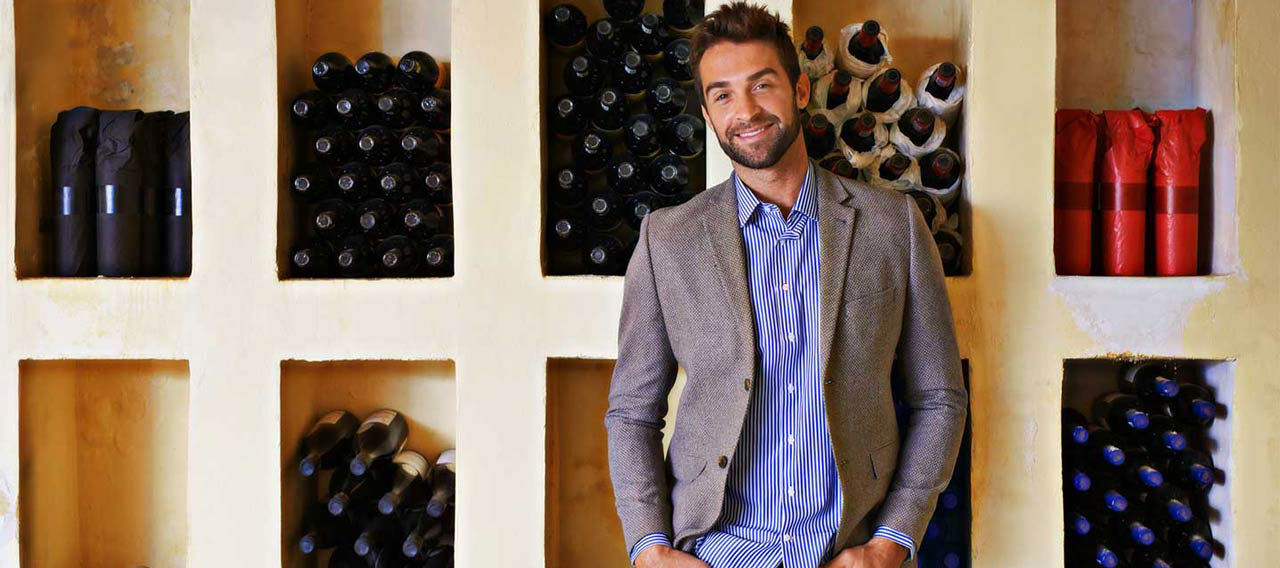
5 tips for buying collectible wine
9 things to consider when purchasing wine or spirits online
This document is advisory in nature and is offered as a resource to be used together with your professional insurance advisors in maintaining a loss prevention program. It is an overview only, and is not intended as a substitute for consultation with your insurance broker, or for legal, engineering or other professional advice.
Chubb is the marketing name used to refer to subsidiaries of Chubb Limited providing insurance and related services. For a list of these subsidiaries, please visit our website at www.chubb.com. Insurance provided by ACE American Insurance Company and its U.S. based Chubb underwriting company affiliates. All products may not be available in all states. This communication contains product summaries only. Coverage is subject to the language of the policies as actually issued. Surplus lines insurance sold only through licensed surplus lines producers. Chubb, 202 Hall's Mill Road, Whitehouse Station, NJ 08889-1600.