
- Individuals & Families
- Businesses
- Agents & Brokers
- Embedded Insurance

Protect your ring with Chubb Valuable Articles insurance and get the peace of mind and financial security you need.

Because pets are family, Chubb now offers pet insurance with top-rated coverage from Healthy Paws.

Chubb offers the insurance protection you need for travel’s many “what ifs”.

Chubb protects small businesses at every stage – from newly formed start-ups to long-time anchors of the community.

Stay ahead of cyber threats with our free Cyber Claims Landscape Report.

Learn more about our dedicated learning paths, Online Learning Center, and more.



Many digital-savvy consumers look for it as a core or add-on option.
Many digital-savvy consumers look for it as a core or add-on option.
Many digital-savvy consumers look for it as a core or add-on option.

Chubb’s in-house technology makes it easy to integrate what we do into your customer experience.

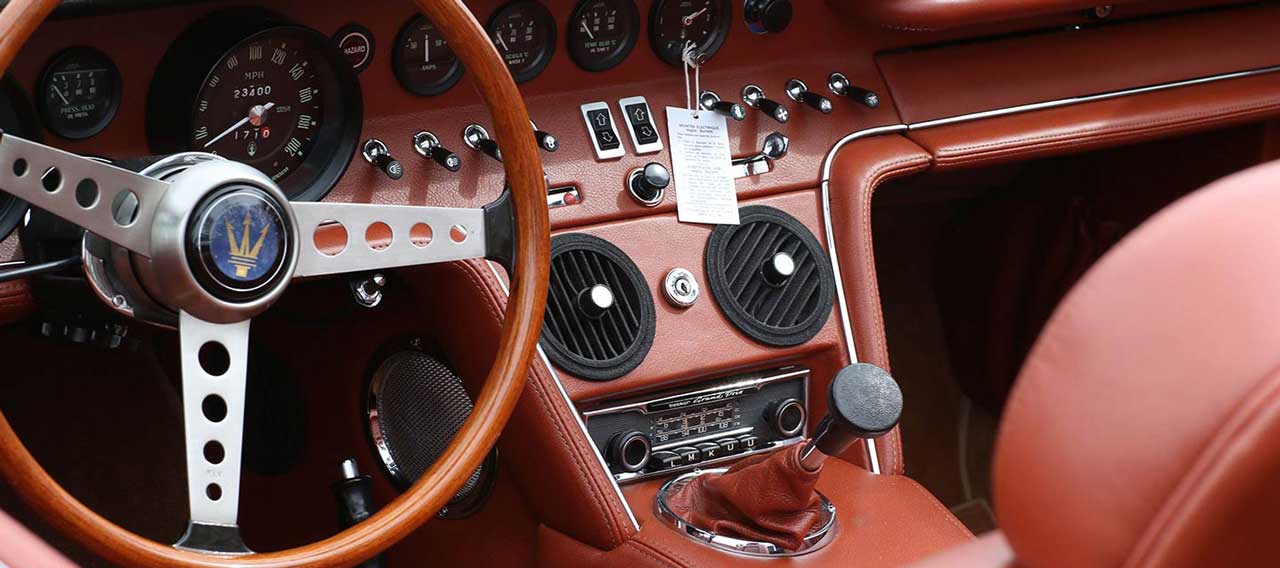
Your classic car is more than a vehicle. It is often tied to great memories of a simpler time, and for many owners, it also represents a significant financial investment. The value and passion for these vehicles are reflected in a market that reached $40.8 billion in 2025 and is projected to grow to over $94 billion by 2035.
If you own a collector vehicle or are thinking about buying one, here are the factors that determine the cost and eligibility of classic car insurance.
What qualifies as a classic car for insurance purposes?
Not every older vehicle automatically qualifies for classic car insurance, and the definition matters more than most people realize. Insurers typically look at a combination of factors: the vehicle's age (generally 10 to 25 years or older, depending on the carrier), its condition, how it is used, and how it is stored. To be eligible, most policies require that the vehicle be well-maintained or restored, used on a limited basis rather than as a daily driver, and kept in a secure, enclosed storage facility when not in use. In other words, a vehicle driven regularly or left exposed to the outdoor elements will likely not qualify for a specialty classic car policy.
There are also instances where rarity and uniqueness may be more relevant than the age of the vehicle. Limited-release models, special editions, or vehicles with historical significance may also influence collectability when compared with standard production versions.
What determines the cost of classic car insurance?
The cost of classic car insurance can vary widely depending on the number of vehicles insured and the agreed value of each. In general, classic car policies offer significant savings compared to standard auto insurance because collector vehicles are driven much less frequently.
Several other factors affect your final cost, including the total agreed value for each car. “Agreed value” means the value of the vehicle is locked in at the start of the policy so that you, the owner, receive the full amount with no depreciation applied in the event of a total loss. This is different from most standard auto policies designed for “everyday use” vehicles, in that the car’s value depreciates over time. With a classic car policy offered by a company like Chubb, if you agree your car is worth $150,000, that is exactly what you receive if the car is a total loss.
Other factors include:
- the location of the vehicle
- how and where the vehicle is stored
- how frequently it is driven, and
- the owner’s driving history
While price is a factor, not all policies are created equal and cost shouldn’t be the sole consideration. You want a policy that will restore your vehicle to the way it was before the loss, which isn’t always easy with classic auto where parts and manufacturers may no longer exist.
Leaders in classic car insurance such as Chubb offer benefits like the freedom to choose your own repair shop, which is vital for owners who have a trusted specialist in mind for their specific vehicle’s make or model. Like Chubb, they may also cover the cost of original equipment manufacturer (OEM) parts or even fabricated parts if the originals are no longer available. This ensures that a repair never diminishes the car's historical or financial value. Learn more about Chubb’s classic car insurance here.
Ways to save on classic car insurance costs
Premium saving credits will vary from carrier to carrier. Some carriers offer discounts for the presence of anti-theft devices and enclosed garages, while others like Chubb offer credits for bundling policies together. A good agent or broker will help you determine what credits you qualify for when you discuss your classic car insurance needs.
A vehicle built on heritage and passion deserves specialized protection from a partner who values your collection as much as you do. Visit our classic car insurance page today to discover how we provide the high-quality coverage your classic car has earned.
FAQ
Classic car insurance is generally more affordable than standard auto insurance because these vehicles are not used for daily transit and are typically maintained with exceptional care. Premiums are generally lower because the insurance is structured around limited usage, which helps reduce the risk of liability and collision claims compared to a daily driver. Industry benchmarks for 2026 continue to show that owners can save 40% or more by moving a collector vehicle from a standard policy to a dedicated classic car policy.
Classic car policies typically restrict daily use of the covered vehicles because the coverage is specifically designed for pleasure drives and hobby activities rather than commuting. Driving a classic vehicle daily can affect both your eligibility for these specialized rates and the coverage available in the event of a claim.
For those who want to enjoy their cars frequently, Chubb’s unlimited mileage for hobby use offers a perfect middle ground, allowing for significant road time as long as the vehicle is not your primary source of transportation.
Yes, the agreed value of your vehicle is one of the primary factors that determines your premium, since a higher insured value represents greater risk for the insurer. That said, classic car premiums remain favorable compared to standard auto policies because the limited usage and secure storage significantly reduce overall risk.
As a well-maintained classic car appreciates in value over time, owners typically update their agreed value at renewal to reflect the current market, which can gradually increase the premium. However, because the vehicle's usage and storage profile generally remain consistent, the rate itself tends to stay competitive relative to the growing value of the asset being protected.
Sources
1. Market Research Future, *Classic Cars Market Analysis and Forecast 2035*: (https://www.marketresearchfuture.com/reports/classic-cars-market) (Published Sept 2026)
2. Hagerty / CNBC, *Year-End Collector Car Market Report*: [https://www.cnbc.com/](https://www.cnbc.com/) (Updated Jan 2026)
3. CNBC Select, *Best Classic Car Insurance Companies of 2026*:(https://www.cnbc.com/select/best-classic-car-insurance/)
No part of this article may be reproduced in any written, electronic, recording, or printed form without written permission of Chubb.
Disclaimer - The content of the above article is not intended to constitute professional advice. Although all content is believed to be accurate, Chubb Insurance Singapore Limited (Chubb) makes no warranty or guarantee about the accuracy, completeness, or adequacy of the content of this article. Users relying on any content do so at their own risk.
Insights and expertise

Classic Car Insurance vs. Regular Car Insurance: What Every Collector Should Know

How to drive in the snow without needing a tow
10 tips for safely storing your treasured vehicle

Get the keys to block auto hack attacks
This document is advisory in nature and is offered as a resource to be used together with your professional insurance advisors in maintaining a loss prevention program. It is an overview only, and is not intended as a substitute for consultation with your insurance broker, or for legal, engineering or other professional advice.
Chubb is the marketing name used to refer to subsidiaries of Chubb Limited providing insurance and related services. For a list of these subsidiaries, please visit our website at www.chubb.com. Insurance provided by ACE American Insurance Company and its U.S. based Chubb underwriting company affiliates. All products may not be available in all states. This communication contains product summaries only. Coverage is subject to the language of the policies as actually issued. Surplus lines insurance sold only through licensed surplus lines producers. Chubb, 202 Hall's Mill Road, Whitehouse Station, NJ 08889-1600.