
- Individuals & Families
- Businesses
- Agents & Brokers
- Embedded Insurance

Protect your ring with Chubb Valuable Articles insurance and get the peace of mind and financial security you need.

Because pets are family, Chubb now offers pet insurance with top-rated coverage from Healthy Paws.

Chubb offers the insurance protection you need for travel’s many “what ifs”.

Chubb protects small businesses at every stage – from newly formed start-ups to long-time anchors of the community.

Stay ahead of cyber threats with our free Cyber Claims Landscape Report.

Learn more about our dedicated learning paths, Online Learning Center, and more.



Many digital-savvy consumers look for it as a core or add-on option.
Many digital-savvy consumers look for it as a core or add-on option.
Many digital-savvy consumers look for it as a core or add-on option.

Chubb’s in-house technology makes it easy to integrate what we do into your customer experience.
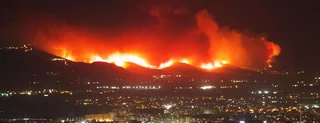
Wildfire smoke is a growing risk for businesses across the United States. Industries such as Life Sciences, Manufacturing, Healthcare, and Technology are especially vulnerable. Even when fires are miles away, smoke can disrupt operations, contaminate products and challenge business continuity.
Compelling data
Since 2015, the U.S. has experienced at least one billion-dollar wildfire event every year.1 Damages from wildfire disasters between 2017 and 2021 were greater than the total for the previous 27 years combined.2 There was a large increase in wildfire costs in 2025 because the Los Angeles wildfires became the costliest wildfire event on record, with damages estimated at $61.2 billion—about double the previous record, driven by more intense fire weather and increased development in vulnerable areas.3 As wildfire seasons grow longer and more communities expand into wildland areas, proactive measures are more essential than ever to minimize the impact of these events.
Wildfire smoke readiness plan
Agents and brokers can support clients by recommending a structured wildfire plan that covers regular upkeep and clear steps for red flag warning periods. Encouraging clients to revisit and practice the plan annually ensures it remains effective. Key steps for mitigating wildfire smoke damage may include:
- Prepare for smoke events: Before wildfire season, set up procedures to monitor and respond to wildfire and smoke forecasts. Stock up on supplies like portable air cleaners, extra filters, and duct materials. Smoke can quickly clog filters, so be ready to change them daily if needed.
- Maintain HVAC systems: Service all dampers, actuators, and HVAC controls before wildfire season. If the building uses outside-air economizers, check their settings to ensure they can be shut off during smoke events. Well-maintained HVAC equipment is essential for good indoor air quality during wildfire smoke events.
- Track air filter pressure: Install a port or pressure gauge on air-handling units to monitor filter pressure. Replace filters when the pressure drop is about double the normal reading. If outdoor air quality stays poor for an extended period, consider changing filters more often—even daily if needed.
- Upgrade to high-efficiency HVAC filters: Use filters with a Minimum Efficiency Reporting Valve (MERV) of 13 or higher. These filters capture particles between 0.3 and 10 microns, offering better protection during smoke events. Before installing, verify that the HVAC system can operate properly with these filters.
- Add supplemental filtration at intakes: During smoke events, use additional air filters (MERV 13 or higher) at outdoor air intakes if possible, and install in a manner avoiding ember ignition potential. Prior to fire season, inspect and clean the air intake vents, note the quantity and size of filters needed, and gather supplies such as tape and duct material to mount filters and update it as experience is gained. Filters with activated carbon can help control odors and harmful gases. For best results, consult a licensed HVAC design professional and consider installing permanent filter racks at outdoor air intakes.
- Optimize HVAC airflow: Make sure the facility’s airflow protects both people and equipment during smoke events. Before wildfire season, set outdoor air intake levels to control odor, temperature, and carbon dioxide while maintaining a positive building pressure to avoid drawing smoke into the building. Conduct an intake air trial run in smoke-ready mode to fine-tune the system.
- Seal the building exterior: A well-sealed and insulated building envelope helps keep smoke out and maintains indoor air quality. Leading up to wildfire season, inspect exterior doors, windows, vents, and roof areas for openings and gaps where smoke could enter and seal them as needed. During smoke events, install any additional temporary sealing measures, and limit ingress and egress to designated entrances equipped with vestibules, airlocks, rotating doors, or air curtains. Post signs on doors that will remain closed during the event.
- Limit outside air intake and night cooling: If the HVAC system allows, shut down or reduce the amount of outside air brought into the building during smoke events to limit smoke contamination. Night air cooling systems may also need to be disabled to further reduce the potential for drawing in smoke-contaminated air, especially if these systems operate automatically.
- Monitor indoor air quality: Keep low-cost air quality sensors on hand with PM2.5, carbon monoxide, and/or smoke detection capabilities. These devices can promptly alert occupants to worsening indoor air quality caused by open doors or windows, or problems with filtration systems. Ensure senor data is easily accessible and that prompt action can be taken if indoor air quality worsens during a smoke event.
- Reduce other indoor air pollutants: Activities like cooking, vacuuming, smoking, and using printers can increase fine particles (PM2.5) and other air pollutants. During wildfires or smoke events, minimize these activities to help keep indoor air cleaner.
- Designate clean air spaces: Set up designated clean air areas within the building before wildfire season to protect occupants. Equip these spaces with portable room air cleaners that use High-Efficiency Particulate Air (HEPA) or other high-efficiency filters, and use air quality sensors to monitor conditions. Keeping these areas well-sealed and away from exterior doors and windows helps maintain cleaner air during smoke events.
As wildfire and smoke risks continue to intensify, organizations need to shift from reaction to readiness. A clear, well-practiced Wildfire Smoke Readiness Plan helps protect people, products and operations when air quality deteriorates. By planning ahead and integrating smoke mitigation into their built environment, businesses can be better prepared and more resilient for the next wildfire season and beyond.
The following resources are located on the Chubb Risk Consulting Library:
- “U.S. Billion-Dollar Weather and Climate Disasters,” https://www.climatecentral.org/climate-services/billion-dollar-disasters
- “2024: An active year of U.S. billion-dollar weather and climate disasters,” https://www.climate.gov/news-features/blogs/beyond-data/2024-active-year-us-billion-dollar-weather-and-climate-disasters
- “2025 in Review: U.S. Billion-Dollar Disasters,” https://www.climatecentral.org/climate-matters/2025-in-review
Insights and expertise

Managing pharmaceutical and medical device representatives

Ignitable liquids in Life Sciences facilities

Trends in commercial real estate

School’s in session: Understanding education related risks

How to protect your business from supply chain disruption

Protecting perishable property
This document is advisory in nature and is offered as a resource to be used together with your professional insurance advisors in maintaining a loss prevention program. It is an overview only, and is not intended as a substitute for consultation with your insurance broker, or for legal, engineering or other professional advice.
Chubb is the marketing name used to refer to subsidiaries of Chubb Limited providing insurance and related services. For a list of these subsidiaries, please visit our website at www.chubb.com. Insurance provided by ACE American Insurance Company and its U.S. based Chubb underwriting company affiliates. All products may not be available in all states. This communication contains product summaries only. Coverage is subject to the language of the policies as actually issued. Surplus lines insurance sold only through licensed surplus lines producers. Chubb, 202 Hall's Mill Road, Whitehouse Station, NJ 08889-1600.