
- Businesses
- Individuals & Families
- Partnerships
- Brokers

Chubb Climate+ spans major industries, with a goal of enabling climate change progress in a meaningful way.

MasterPackage insurance gives broad cover with a wide range of extensions to meet your business needs.

All Chubb policyholders are eligible for cyber services. Get the most value from your Chubb policy and schedule a consultation today.

In a complex world, Chubb’s support for multinationals and their brokers when choosing the right cover has never been more valuable.

Get big expertise, no matter your size and direction.

Protecting all that makes your house, your home.

As one of the world's largest providers of jewellery and fine art insurance, you can count on our unparalleled service and expertise, offering some of the broadest protection available.

As pioneers of using in-house appraisers to help clients establish the value of their property, and mitigate the risk of loss, our appraisal service is a key reason why owners of fine homes and high value possessions around the world choose Chubb

Private aircraft ownership represents a significant investment and unique risk profile, especially for Ultra High Net Worth individuals.

With a vessel as valuable as a luxury yacht, you need to make sure it’s well protected.

Build your business by providing the protection your customers need – it’s insurance for the new possible.

The seamless, secure, and scalable engine behind new possibilities for your company and customers.

Travel insurance made easy.

Strikes, riots and civil commotion (SRCC) is top of mind for real estate businesses across the globe. According to the latest S&P data, there have been 28.7k SRCC events from Jan 1 2024 to May 1 2025. Of these, protest/riot incidents were the majority with a significant spike in April 2025 driven by the “Hands Off protests” in the U.S. For Q2 2025, 100 countries were considered to be High, Very High, or Severe. This includes Countries such as India, the United States, Argentina, France, Germany and the UK. For a long time, insurers have offered protection against SRCC at no extra cost. However, elevated risk environments mean this is becoming less common and property insurers have begun excluding or restricting cover for SRCC from their policies. This means that businesses need to be aware of the potential risks they may face and seek adequate cover accordingly. In this article, I will outline the ongoing SRCC risks across the globe and suggest ways that businesses can best protect their property with Chubb’s Real Estate Industry Practice approach.
The SRCC risk environment for real estate companies
Ongoing impact of technology. The rise of social media, “fake news”, and AI serves as a key driver behind increasing global instability. Social media platforms not only help amplify economic, political and social ills, but can act as catalysts for SRCC events around the world. This was evident with the spread of misinformation on social media which sparked riots across the UK in the Summer of 2024.
Global economic challenges. Geopolitical tension, high levels of inflation and a contracting global economy have contributed to unrest in many countries around the world. Looking to the future, recent research from J.P Morgan states the probability of global recession is currently 40% which has been impacted and influenced by 1the trade & tariff war which began in Q1 of 2025. The ongoing changes in economic policies create high levels of uncertainty for many countries worldwide given the unpredictable nature of tariff levels and their implementation across different nations as well as the fluctuating stock markets reacting to these announcements.
Government Uncertainty. Amid such uncertainty, politics is becoming far more divisive, splitting nations, communities and families. This is giving rise to populism, with extremist movements that appeal to people’s political ideologies mobilising support. In 2024, scheduled elections took place in countries home to nearly half the world’s population. In 2025, elections were called early in Canada and Germany or have come as a surprise such as in South Korea. Others, while scheduled, are highly consequential in determining the future alignment of the country such as Poland & Romania. In each of the above mentioned, there was some form of march, demonstration, or protest / counter protest in the lead up or aftermath of the election. While these have been relatively peaceful to date, the SRCC potential is being closely watched by businesses and insurers alike.
Exacerbation of existing grievances. Civil unrest continues to spread across the world with protestors demonstrating about a range of issues from the rising cost of living to corruption and infringement of democracy, often spilling over into violent clashes with police. Because many of these events are now happening in unexpected places, and with greater frequency and severity, they are even harder for businesses to anticipate.
Future risk monitoring. Due to the unpredictability of these events, high volatility of their impact, and the rapid nature of their occurrence, analysts are finding it increasingly difficult to foresee such risks. This in turn makes it harder for insurers and the insured to mitigate against them.
Many of these new challenges will continue to test definitions and exclusions within insurance policies, particularly for property. Partnering with an insurer who monitors geopolitical risks in house and specialises in Real Estate, understanding the complex risks involved, can help to protect businesses’ vital assets.
Key business actions to mitigate risk to real estate
Claim-scenario planning. Trying to predict the risks that property could be exposed to is not easy. By looking at all potential outcomes and making sure the policy is fit for purpose companies can ensure they are covered for every possibility. It is best to test this using a range of different scenarios, understand how they would affect the business and what type of cover would be needed for each.
Seek interconnected cover. Looking for SRCC coverage that is seamlessly connected to terrorism and property policies can help to ensure there are no gaps in coverage, making sure impacted real estate is protected. For example, events of social unrest may be categorised as SRCC or terrorism, depending on the circumstances. If insureds have terrorism, SRCC and property policies with different insurers, claims disputes following an SRCC event could become tricky. Utilising package products, such as Chubb’s Real Estate Industry Practice approach to terrorism, property and SRCC alleviates the difficulty that risk managers and brokers may face when negotiating claims disputes between different carriers.
Define your limits. You need to have the correct limits and deductibles. Effective claim-scenario planning in place will help to determine how much businesses are willing to pay versus what they will be able to claim if an event occurs.
1 The probability of a recession now stands at 40%”, J.P. Morgan, 27 May 2025
Insights and expertise
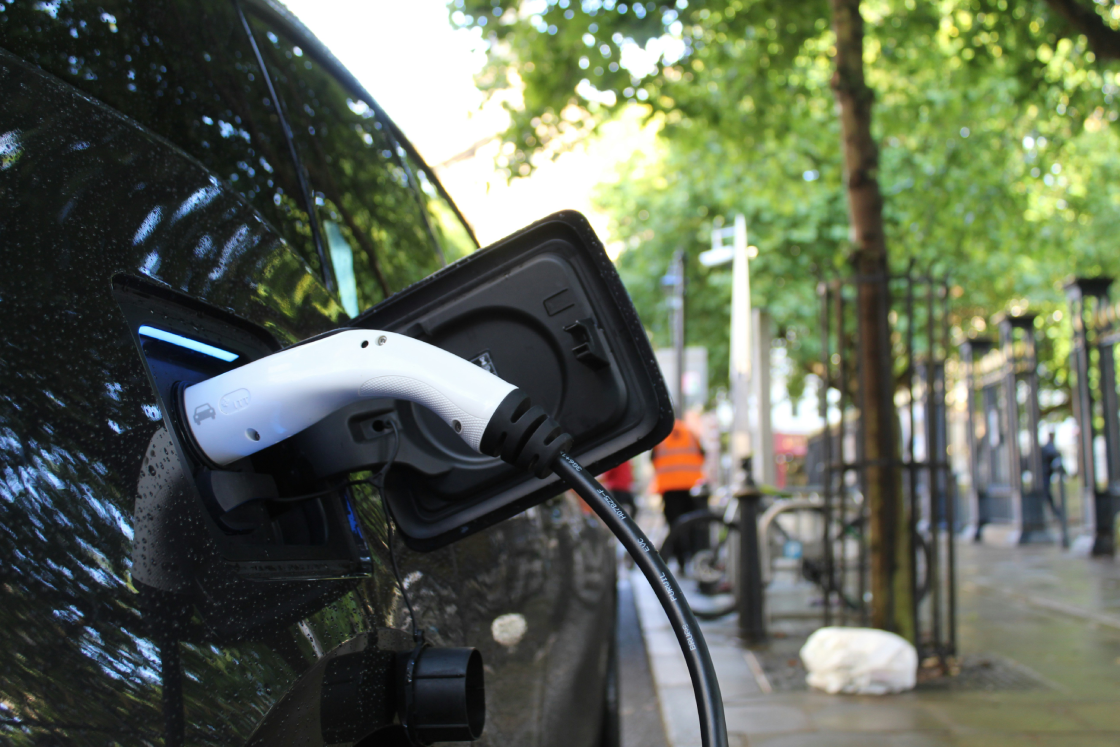
The emergence of EV chargers and risk management considerations

Meshed Offshore Grids Are Key to Our Clean Energy Future

Electric vehicles’ charging software: What businesses need to know
All content in this material is for general information purposes only. It does not constitute personal advice or a recommendation to any individual or business of any product or service. Please refer to the policy documentation issued for full terms and conditions of coverage.
Chubb European Group SE (CEG) is an undertaking governed by the provisions of the French insurance code with registration number 450 327 374 RCS Nanterre. Registered office: La Tour Carpe Diem, 31 Place des Corolles, Esplanade Nord, 92400 Courbevoie, France. CEG has fully paid share capital of €896,176,662. UK business address: 40 Leadenhall Street, London, EC3A 2BJ. Authorised and supervised by the French Prudential Supervision and Resolution Authority (4, Place de Budapest, CS 92459, 75436 PARIS CEDEX 09) and authorised and subject to limited regulation by the Financial Conduct Authority. Details about the extent of our regulation by the Financial Conduct Authority are available from us on request.