- Businesses
- Individuals & Families
- Partnerships
- Brokers

Chubb Climate+ spans major industries, with a goal of enabling climate change progress in a meaningful way.

MasterPackage insurance gives broad cover with a wide range of extensions to meet your business needs.

All Chubb policyholders are eligible for cyber services. Get the most value from your Chubb policy and schedule a consultation today.

In a complex world, Chubb’s support for multinationals and their brokers when choosing the right cover has never been more valuable.

Get big expertise, no matter your size and direction.

Protecting all that makes your house, your home.

As one of the world's largest providers of jewellery and fine art insurance, you can count on our unparalleled service and expertise, offering some of the broadest protection available.
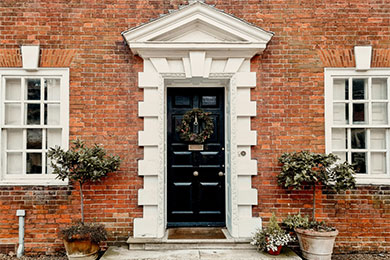
As pioneers of using in-house appraisers to help clients establish the value of their property, and mitigate the risk of loss, our appraisal service is a key reason why owners of fine homes and high value possessions around the world choose Chubb

Private aircraft ownership represents a significant investment and unique risk profile, especially for Ultra High Net Worth individuals.

With a vessel as valuable as a luxury yacht, you need to make sure it’s well protected.

Build your business by providing the protection your customers need – it’s insurance for the new possible.

The seamless, secure, and scalable engine behind new possibilities for your company and customers.

Travel insurance made easy.
Questions for companies to ask when building a multinational insurance programme

Identify your operational exposures
The first step in planning a new multinational insurance programme is to determine what risks will emerge when your business begins operations in one or more new nations or jurisdictions. You can start to identify specific exposures by answering these questions:
- What products or services will my company be providing?
- What types of facilities will my company operate; e.g., manufacturing, warehousing, sales office, etc.?
- What property and equipment will my company own or lease?
- Will I have local employees and company officers?
- How will my company’s operations depend on local vendors, suppliers, and other contractors?
- What new contracts will be signed?
- Will employees from my company’s home country travel frequently to other nations?
Understand risks and requirements specific to each new international location
Your knowledge of your business’s operations will help you identify and mitigate key risks. You’ll also want to turn to your insurance advisors to better understand risks associated with each new location. Here are questions to discuss with insurance agents, brokers, and carriers:
- What are the regulatory and tax requirements for insurance for each new location where my company will operate?
- Are there differences in limits and conditions for policies in the new locations?
- What are the risks associated with climate change in each new market?
- How will inflation impact insurance rates and property valuation in each new market?
- Is political instability a significant risk factor in my company’s new locations?
Determine how a prospective insurer will assist your expanding business
When you establish a multinational insurance programme for your business, you’ll want to be sure that any prospective insurer can meet the needs of your growing business. Here are some questions to ask:
- Does an insurer have dedicated offices or strong network partnerships in all of your new and planned locations or geographic exposures?
- Does an insurer have the technical underwriting expertise to provide risk assessment and policy requirements in all of your new and planned locations and geographic exposures?
- How timely is an insurer’s policy issuance and renewal service?
- How timely is an insurer’s claims response?
- Are local claims services available when an incident occurs?
- Does a prospective carrier provide risk engineering services in your new international locations?
- What digital tools does an insurer provide to help manage risk?
Weigh your insurance options
Once you’ve identified exposures specific to your business and new locations, consider each of the following options for your multinational insurance programme:
- A single global policy — Depending on the nature and reach of your business, a single policy originating in your company’s home nation and covering limited operations worldwide may provide sufficient coverage.
- Separate local policies — Maintaining separate local policies for each country where your business operates can provide several advantages over a single global policy. This option can help you meet local regulatory requirements and contractual obligations.
- Controlled master programme (CMP) — This type of programme provides the benefits of both local and global policies. It includes a global policy originating in your home country and local policies in other countries. The global policy helps fill gaps in local policies as well as offering coverage in countries without local policies.
When considering your insurance programme options, factor in the type of coverage you’ll need as well. For instance, if you plan on operating a vehicle fleet in a new location, you’ll likely need local commercial auto coverage. In this case, a single global policy likely will not provide adequate coverage.
Next steps
Once you’ve answered the questions above, reach out to a broker or agent with multinational experience to discuss your coverage options. When evaluating insurers, holistically consider pricing, coverage, and services.
We understand multinational – and care about your company
Global reach, local expertise – for everyone
Whether your business is big or small, takes you around the world or just around town, Chubb is here for you. Our breadth of experience in construction business insurance means we can provide the guidance and service you need, whenever you need it, wherever you may be.
Partnership that’s personal
We work to understand your business and where you’re headed so we can be proactive about meeting your needs. We invest in getting to know you, your team, and your customers. The goal: to help you see ahead, be ahead, and stay ahead.
Creative problem-solving
Insurance isn’t one-size-fits-all – and neither is our approach. Our playbook is always evolving because we’re always helping clients avoid risk in smarter ways. That means we bring the latest thinking and a fresh perspective to solving your challenges.
Unmatched expertise and financial strength
We’ve served clients and partnered with leading organisations for more than 200 years. Our longevity, expertise and financial strength are the bedrock of our business.
All content in this material is for general information purposes only. It does not constitute personal advice or a recommendation to any individual or business of any product or service. Please refer to the policy documentation issued for full terms and conditions of coverage.
Chubb European Group SE (CEG) is an undertaking governed by the provisions of the French insurance code with registration number 450 327 374 RCS Nanterre. Registered office: La Tour Carpe Diem, 31 Place des Corolles, Esplanade Nord, 92400 Courbevoie, France. CEG has fully paid share capital of €896,176,662. UK business address: 40 Leadenhall Street, London, EC3A 2BJ. Authorised and supervised by the French Prudential Supervision and Resolution Authority (4, Place de Budapest, CS 92459, 75436 PARIS CEDEX 09) and authorised and subject to limited regulation by the Financial Conduct Authority. Details about the extent of our regulation by the Financial Conduct Authority are available from us on request.
Insights and expertise

What businesses should know about water damage

Why you need a risk management programme and how to get started