- Businesses
- Individuals & Families
- Partnerships
- Brokers

Chubb Climate+ spans major industries, with a goal of enabling climate change progress in a meaningful way.

MasterPackage insurance gives broad cover with a wide range of extensions to meet your business needs.

All Chubb policyholders are eligible for cyber services. Get the most value from your Chubb policy and schedule a consultation today.

In a complex world, Chubb’s support for multinationals and their brokers when choosing the right cover has never been more valuable.

Get big expertise, no matter your size and direction.

Protecting all that makes your house, your home.
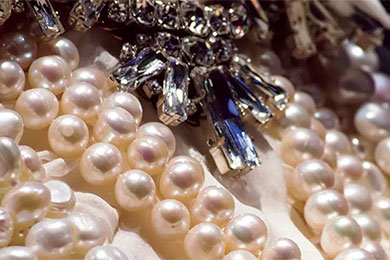
As one of the world's largest providers of jewellery and fine art insurance, you can count on our unparalleled service and expertise, offering some of the broadest protection available.

As pioneers of using in-house appraisers to help clients establish the value of their property, and mitigate the risk of loss, our appraisal service is a key reason why owners of fine homes and high value possessions around the world choose Chubb

Build your business by providing the protection your customers need – it’s insurance for the new possible.

The seamless, secure, and scalable engine behind new possibilities for your company and customers.

Travel insurance made easy.

Whether you’re buying an engagement ring or choosing a pair of diamond earrings, purchasing a diamond is a decision you don’t want to rush into. In fact, before you start looking for that special stone, you may want to invest a little time to learn more about diamonds and how to protect them.
Below are a few tips you’ll need to know before buying a diamond:
1. Get to know the four Cs.
A diamond’s quality is measured by the four Cs: cut, colour, clarity, and carat. Which is the most important and why?
- Cut is the most important characteristic to consider when selecting a diamond because it has the most impact on the diamond’s brightness and scintillation or sparkle. When a diamond is cut to proper proportions, this will maximize how the light bounces back to produce the sparkle we want. Even a diamond with perfect clarity and colour will appear dull if the cut isn’t right.
- Colour is the next most important characteristic of the four Cs. In this instance, colour refers to the lack of colour. In other words, the less colour, the more valuable the diamond. Truly colourless diamonds are very rare and colour distinctions can be subtle and only visible to the trained eye. That’s why you should refer to the GIA colour scale, which uses letters starting with D for colourless through to Z for light yellow, brown, or grey stones, to indicate the diamond’s colour. Once the colour grade is beyond the letter M, the light yellow, brown or grey colour becomes visible to the naked eye.
- Clarity refers to imperfections or flaws on the surface or inside the stones, which can be microscopic in nature and nearly impossible to see to the naked eye. While diamonds with the least blemishes and inclusions receive the highest grading, those flaws may not affect the diamond’s overall appearance and beauty.
- Carat refers to the diamond’s weight, not its size. In fact, a diamond with a high carat and a poor cut will look smaller than one with a lower carat and a high-quality cut. To help maximize your budget, look for diamonds with a carat weight that is just below a standard size, for example, search for a 1.9 carat diamond rather than a 2.0 carat. You’ll save money and will not visibly notice the difference in the size of the stone.
2. Team up with a quality jeweller.
When choosing a jeweller, be selective and find someone with gemologist credentials (such as Gem-A in Britain) who is affiliated with jewellery industry groups and professional associations. If you need help selecting a jeweller to work with, contact your independent insurance agent.
3. Request a grading report.
In addition to certification certificates, you can also ask your jeweller for a grading report. This document will detail the specific characteristics of the diamond, including the four Cs, confirmation that the stone is natural or lab-grown, and will disclose any treatments or alterations the diamond has undergone to change its colour or clarity.
4. Protect your purchase.
Make sure to have your jewellery appraised and insured. Look for a Valuable Articles insurance policy that provides all-risk, worldwide coverage, including mysterious disappearance and automatic protection for newly acquired items. Periodically have your jewellery reappraised to be sure your insurance is updated and reflects current values. Consult with your jeweller on an annual basis to have your item professionally cleaned and condition checked for any loose prongs or clasps.
For more information on Chubb in the UK click here.
Sources:
The 4Cs of Diamond Quality
Diamond Buying Tips
GIA Diamond Grading Report
All content in this material is for general information purposes only. It does not constitute personal advice or a recommendation to any individual or business of any product or service. Please refer to the policy documentation issued for full terms and conditions of coverage.
Insights and expertise