
- Individuals & Families
- Businesses
- Brokers

With winter on its way out, you may be ready for some spring cleaning.

Make sure you protect your classic cars from damage or additional wear and tear.

Keep your important papers and small valuables away from burglars, fire or natural disaster.

For over a hundred years, we’ve offered unparalleled stability and protection for small boats, yachts, luxury mega-yachts, and more.

Here are some things you can do to assist firefighters and minimize the damage to your home.

At their worst, disputes between professional service firms and their clients can lead to costly lawsuits.
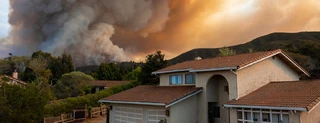
Wildfires have become increasingly destructive over the past decade. We are seeing the intensity and frequency of wildfires increase, as well as their proximity to urban areas.
Understanding the dynamics of wildfires and effective defense strategies are crucial to helping your home survive a wildfire.
Understanding wildfire behaviour
Wildfire growth and behaviour are influenced by several factors, including:
- Weather
- Topography
- Fuel – such as branches, dry vegetation, etc.
The length and intensity of wildfire season is largely dictated by weather, specifically wind, temperature, precipitation, and humidity. When each weather condition is extreme, such as high winds, high temperatures, lack of precipitation, and low humidity.
Topography describes land shape and, like weather, is a factor influencing wildfire behaviour that cannot be changed. Topographic factors affecting wildfire movement include elevation, slope, aspect, and features like canyons and valleys. Fires burn hotter and faster moving uphill and can travel quickly through narrow canyons, making hilltops, and ridges particularly susceptible to wildfire growth.
The availability of fuels, such as vegetation, dead leaves, and combustible material located close to buildings, is the most significant factor that impacts wildfire behaviour. If a wildfire has a continuous fuel source, it can burn longer and spread quickly.
In urban areas, densely packed structures can serve as a fuel source for wildfires, potentially leading to large-scale conflagrations. A conflagration is a significant fire that spreads rapidly and devastates extensive areas. Such events are often driven by extreme weather conditions, including droughts and high winds exceeding 50 km/hr, and vulnerable topography.
Creating defensible space
Reducing or eliminating continuous fuels can help increase your home’s chance of surviving a wildfire. Defensible space1 is the area around a structure where vegetation is managed to reduce a wildfire’s intensity and ability to spread. Creating and maintaining defensible space around your home can provide fire breaks that help prevent the spread of fire from vegetation to the structure. Defensible space can also provide space for firefighters to help defend your home, if needed.
Maintaining defensible space around homes is becoming more important as fires increasingly move from wildlands into suburban and urban areas. Wildfires require fuel to spread, and by managing the vegetation and materials around your home, you can significantly alter the fire’s intensity and direction.2
There are four Defensible Space Zones to maintain:
- Zone 1 (Non-Combustible Zone - 0-5 feet) – Should be free of flammable items and maintained frequently to prevent ember intrusion, which causes 90% of home losses in wildfires.
- Zone 2 (5-30 feet) – Should be “lean, clean, and green.” The focus is to reduce fuel lines to your home and maintain a healthy yard.
- Zone 3 (30-100 feet) – Should be open and park-like, which will help to minimize fuel to slow a fire’s progress and intensity.
- Zone 4 (100+ feet) – More vegetation is present, and a little less regular maintenance is needed, but attention should be made to downed and dead trees and the overall amount of fuel present.
Home hardening
When it comes to enhancing the resilience of your home against wildfires, several home hardening options can significantly reduce risk:
- Class A roofs – Certain roofing materials, including asphalt shingles, metal, or tile, provide superior fire resistance that help protect your home from embers and flames.
- Ember-resistant vents – Ember-resistant vents are a critical feature, designed to prevent embers from entering your attic and igniting combustible materials inside. All vent openings should be equipped with 1/8-inch metal mesh or ember-resistant vents. Fiberglass or plastic mesh can melt or burn. Common 1/4-inch screens are ineffective and should be replaced or retrofitted in wildfire prone areas.
- Non-Combustible Deck and Fencing – Installing non-combustible decks and fencing can help limit the spread of fire from vegetation to the main structure.
While these three options are effective, it is essential to explore a variety of other home hardening strategies tailored to your specific environment and needs.
By focusing on creating defensible space and investing in home hardening solutions, homeowners can significantly increase their property’s survivability during a wildfire.
Insights and expertise

Grill safety 101: Essential tips for a safe BBQ season

Winter weather, frozen pipes, and smart protection: A conversation about water leak detection systems

Why Excess Liability coverage is important
This document is advisory in nature and is offered as a resource to be used together with your professional insurance advisors in maintaining a loss prevention program. It is an overview only, and is not intended as a substitute for consultation with your insurance broker, or for legal, engineering or other professional advice.
Chubb is the marketing name used to refer to subsidiaries of Chubb Limited providing insurance and related services. For a list of these subsidiaries, please visit our website at www.chubb.com. Insurance provided by Chubb Insurance Company of Canada or Chubb Life Insurance Company of Canada (collectively, “Chubb Canada”). All products may not be available in all provinces or territories. This communication contains product summaries only. Coverage is subject to the language of the policies as actually issued.