
- Individuals & Families
- Businesses
- Brokers
With winter on its way out, you may be ready for some spring cleaning.

Make sure you protect your classic cars from damage or additional wear and tear.

Keep your important papers and small valuables away from burglars, fire or natural disaster.

For over a hundred years, we’ve offered unparalleled stability and protection for small boats, yachts, luxury mega-yachts, and more.

Here are some things you can do to assist firefighters and minimize the damage to your home.

At their worst, disputes between professional service firms and their clients can lead to costly lawsuits.
Clean air and water are the most important resources that have a direct impact in our daily lives and are being depleted at a rapid rate. Some of the major causes for depletion of natural resources are overpopulation, poor farming practices, deforestation, and pollution.1
Air and water are fundamental resources from earth which we need to sustain a healthy life. It is crucial that we engage in conserving these resources for present and future generations.
Sustainability, conservation, and healthy living starts at home. Here are some quick tips to evaluate and assess how you can promote healthy living while being ecofriendly.
Maintain good indoor air quality
Have an air quality check done by a professional. They can walk through your home and use devices to test the air quality for free floating harmful elements, such as radon and other pollutants. Additionally, having clean air circulating at home, will allow you to use your cooling/HVAC system efficiently and to maintain an ambient temperature extending the life of these units and most importantly leading to a healthier environment in your home.
Common causes for poor indoor air quality (IAQ) are2:
- Not enough ventilation, lack of fresh outdoor air, or contaminated air being brought into the building
- Poor upkeep of ventilation, heating, and air conditioning systems
- Dampness and moisture damage due to leaks, flooding, or high humidity
- Occupant activities, such as construction or remodelling
- Indoor and outdoor contaminated air
When building or remodeling homes, builders and contractors should refer to the Government of Canada’s indoor air quality (IAQ) guideline.3
To effectively manage your IAQ, one should measure the air quality outside, as it influences indoor conditions. To obtain information on outdoor air quality, visit Weather.gc.ca.4
Maintaining good IAQ leads to a reduction of one’s carbon footprint, as you will be able to conserve and utilize your HVAC systems and appliances efficiently. Here are some tips to monitor and maintain a healthy IAQ:
- Install indoor air monitoring devices that measure air quality in real-time and provide alerts on your smart phone
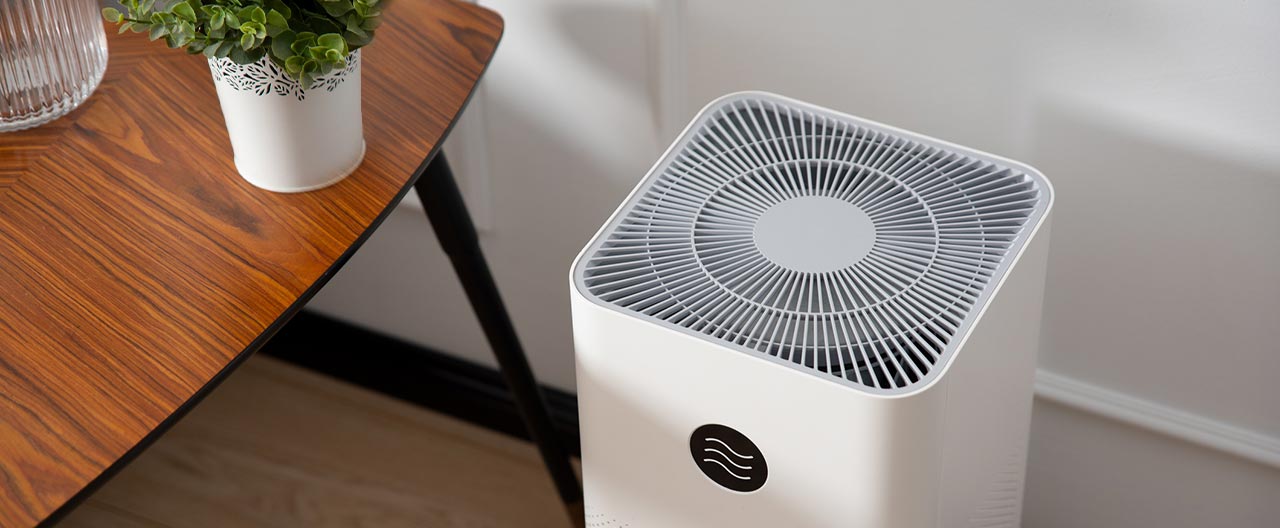
- Use air purifiers (stand alone, mesh/membrane)
- Change and maintain filters in HVAC systems and appliances
- Maintain a schedule for vent (HVAC and dryer) cleaning
Create a water efficient home
There are many ways to increase water efficiency at home. Water quality checks are helpful as they will identify harmful chemicals that can cause erosion of your pipes and more importantly in your drinking water. To learn more about drinking water safety in Canada, visit Canada.ca.5 Bad water quality is detrimental to your appliances and plumbing. For example, excessive sedimentation or chemical deposits can lead to pipe corrosion, and eventually, to leaks, causing costly water damage.
Your provincial or territorial drinking water authority or your local public health unit can help you find an accredited laboratory to do the tests on water quality in your home.6 Based on your water quality score, you can source water filters/filtration devices that will help in mitigating risk. When purchasing a water filtration system, be sure to look for the National Sanitation Foundation (NSF) seal of approval, accredited by the Standards Council of Canada. The NSF mark assures consumers, retailers, and regulators that certified products have been rigorously tested to comply with all standard requirements.

Tips to save water at home
Additional things you can do in your home to conserve water are7:
- Install high efficiency toilets
- Fix leaks immediately
- Recycle indoor water/rainwater to water plants and your yard
- Take shorter showers
Pollution Prevention Tips for Water Conservation:
- Compost your food scraps rather than using a garbage disposal in your sink8
- Make sure that you maintain septic and sewer city guidelines
- Check your water quality regularly, and alert city office if levels of contaminates increase
Research and advance technology are paving the way to innovative devices and solutions to help in conserving earth’s resources. Communities should continue to support and protect their homes and the environment by utilizing these tools and solutions which will lead to efficient homes and lower the erosion of the earth’s resources.
1 https://www.conserve-energy-future.com/causes-effects-solutions-depletion-natural-resources.php
2 https://www.osha.gov/indoor-air-quality
4 https://weather.gc.ca/airquality/pages/index_e.html
5 https://www.canada.ca/en/health-canada/services/environment/drinking-water.html
6 https://www.canada.ca/en/health-canada/services/environment/drinking-water/well/test.html
7 https://saveourwater.com/how-to-save-water/#2
8 https://www.epa.gov/p2/pollution-prevention-tips-water-conservation
Insights and expertise

Grill safety 101: Essential tips for a safe BBQ season

Winter weather, frozen pipes, and smart protection: A conversation about water leak detection systems

Why Excess Liability coverage is important
This document is advisory in nature and is offered as a resource to be used together with your professional insurance advisors in maintaining a loss prevention program. It is an overview only, and is not intended as a substitute for consultation with your insurance broker, or for legal, engineering or other professional advice.
Chubb is the marketing name used to refer to subsidiaries of Chubb Limited providing insurance and related services. For a list of these subsidiaries, please visit our website at www.chubb.com. Insurance provided by Chubb Insurance Company of Canada or Chubb Life Insurance Company of Canada (collectively, “Chubb Canada”). All products may not be available in all provinces or territories. This communication contains product summaries only. Coverage is subject to the language of the policies as actually issued.