
- Individuals & Families
- Businesses
- Brokers

With winter on its way out, you may be ready for some spring cleaning.

Make sure you protect your classic cars from damage or additional wear and tear.

Keep your important papers and small valuables away from burglars, fire or natural disaster.

For over a hundred years, we’ve offered unparalleled stability and protection for small boats, yachts, luxury mega-yachts, and more.

Here are some things you can do to assist firefighters and minimize the damage to your home.

At their worst, disputes between professional service firms and their clients can lead to costly lawsuits.
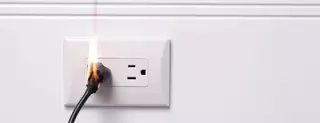
For the last decade, electrical malfunctions have caused more than 2000 residential fires annually in Canada.¹ By remaining vigilant about the warning signs of electrical problems and taking preventative steps, homeowners can significantly reduce the risk of an electrical fire.
Causes of electrical risks
Newer homes—especially those built in the last 25 years—are generally equipped with advanced electrical systems that incorporate key fire safety technologies. But a home of any age can catch fire if there is a problem with the electrical system. Key causes of electrical malfunctions include the following:
- Poor wiring and connections—Loose, faulty, frayed, or worn-out wiring can cause overheating and fires. In a worst-case scenario, poor or damaged wiring can lead to arcing, when electricity jumps across a gap and produces sparks and intense heat that cause fires.
- Ground faults—Ground faults occur when electricity finds an unintended path directly to the ground—for instance, when electricity travels from a frayed wire through a metal appliance to the ground. Faulty devices, wiring insulation failure, and other wiring problems can cause ground faults. While ground faults can cause fires, their main danger is the potential for electric shock.
- Overloaded circuits—Electrical circuits are designed to carry a specific amount of current. If the current drawn by devices on the circuit exceeds capacity, the circuit becomes overloaded, potentially leading to overheating and fire.
- Short circuits—As the name implies, a short circuit occurs when electrical current bypasses its intended circuit and instead travels along a shorter pathway. Short circuits can cause overheating, which could ignite nearby flammable materials.
Signs of electrical system problems
Several telltale signs indicate that something is wrong with your home’s electrical system. If you experience any of the following, your home may be at greater risk for electrical fire and you should seek repairs from a licenced electrician:
- You see sparks from outlets—or scorch marks around outlets.
- You smell a burning or rubbery odor coming from appliances or outlets.
- Switches or outlets produce unusual sounds, such as buzzing or pops.
- You experience a tingling sensation when touching an appliance.
- Circuit breakers trip frequently—or fuses blow.
- Lights dim or flicker—or fail to go completely dark after being shut off.
In addition, contact a licenced electrician for an inspection if your home was built before 1972 and you’re unsure if the electrical system has been updated.
Proactive measures to reduce risks
There are multiple proactive measures you can take to help mitigate the risk of fire caused by electrical hazards. In addition to being aware of the signs of electrical system problems, consider installing the following:
- Surge protectors—Surge protectors help reduce the risk of electrical fire by preventing excess voltage from reaching and damaging devices and appliances. They work by diverting excess voltage away from connected devices during a power surge or spike. Surge protectors may need to be replaced every three to five years because their components can wear out.
- AFCIs and GFCIs—Arc fault circuit interrupters (AFCI) trip a circuit when they detect arcing. AFCIs can be installed at outlets or in electrical panels. Many modern building codes require AFCIs to be installed in living areas, such as bedrooms. Ground fault circuit interrupters (GFCIs) trip when they detect ground faults. They prevent shock and electrocution, and are primarily installed in areas where water may conduct electricity, such as kitchens, bathrooms, and laundry rooms.
- Voltage stabilizers—Voltage stabilizers help maintain a consistent voltage output, reducing the risk of electronics overheating due to voltage fluctuations. They can be installed to cover your entire house or placed at outlets.
- Monitoring systems—An electricity monitoring system uses sensors to analyze your home’s electrical network for potential fire hazards, including loose connections, damaged wires, and faulty appliances. Once an issue is detected, you may need to contact a licenced electrician for repairs.
Insights and expertise



This document is advisory in nature and is offered as a resource to be used together with your professional insurance advisors in maintaining a loss prevention program. It is an overview only, and is not intended as a substitute for consultation with your insurance broker, or for legal, engineering or other professional advice.
Chubb is the marketing name used to refer to subsidiaries of Chubb Limited providing insurance and related services. For a list of these subsidiaries, please visit our website at www.chubb.com. Insurance provided by Chubb Insurance Company of Canada or Chubb Life Insurance Company of Canada (collectively, “Chubb Canada”). All products may not be available in all provinces or territories. This communication contains product summaries only. Coverage is subject to the language of the policies as actually issued.