
MyHomeGuard is more than just household insurance. It provides cover for ATM assault, injuries resulting from theft, and personal accidents that occur outside your home.

Chubb leverages superior underwriting expertise and world renowned claims, account services, and financial strength to offer solutions for small and medium businesses.

Today’s multinational organizations face complex and interconnected risks. We offer insurance solutions that are tailored to global needs as well as local requirements, helping them address their risk management challenges.

New Trends for the New Generation! Be a CHUBB Slasher!

Our partners’ contributions to our success are undeniable. As one of the world’s largest and strongest insurers, we offer a range of products and services capabilities through our distribution channels to ensure yours, too.

Chubb has a proven track record of maximising ancillary revenue for more than 120 business partners across Asia Pacific.

AEON & Chubb Life join hands to secure your future.

Protect your travel adventures, home, and everyday moments with Chubb’s General Insurance. Enjoy flexible coverage from a global insurance leader and buy online in minutes—peace of mind is just a click away.

Buy life insurance online for all your needs—critical illness, accidents, and term life. Enjoy comprehensive protection, health and wellness benefits, and flexible coverage options with easy online purchase.
Routine Inspection and Maintenance
Do you know if your roof is leaking? Roofs tend to be ignored until they begin to leak and expensive repairs are required. The key to maintaining a roofing system is through routine inspection and maintenance procedures.
A roof should be considered a capital piece of equipment which must be kept functioning properly. A well planned and executed program of inspection and maintenance can anticipate possible problem areas and have them fixed before the intrusion of water causes a serious problem.
A service agreement with the roof contractor is the building owner’s best choice for routine maintenance procedures. However, building owners can have their own employees conduct the inspection and perform minor maintenance procedures.
It is best to negotiate a robust roof warranty that includes labour costs. Oftentimes, green roofs and solar arrays can negate the warranty. Due diligence must be performed up front before contracts are signed and the work begins.
Roof Inspection Program Basics
- Roof inspections should be conducted semi-annually
- Inspections should begin inside the building
- High-risk areas should be examined last
A complete inspection of a roof should address:
- Building interior
- Building exterior
- Roof membrane
- Roof flashings
Roof inspections should begin with the building interior. Interior water spots on ceiling panels may be caused by actual roof leaks. Lift ceiling tiles and examine the underside of the deck for signs of water intrusion. Water marks on interior surfaces and walls should also be noted.
Inspect the building exterior for signs of settlement of the foundation and walls. Is the top line of the roof level from all angles? Floor drains and gutters should be visually examined to ensure that they are clear of debris and not physically damaged. Water stains on exterior walls may be a sign of a clogged gutters or floor drains.
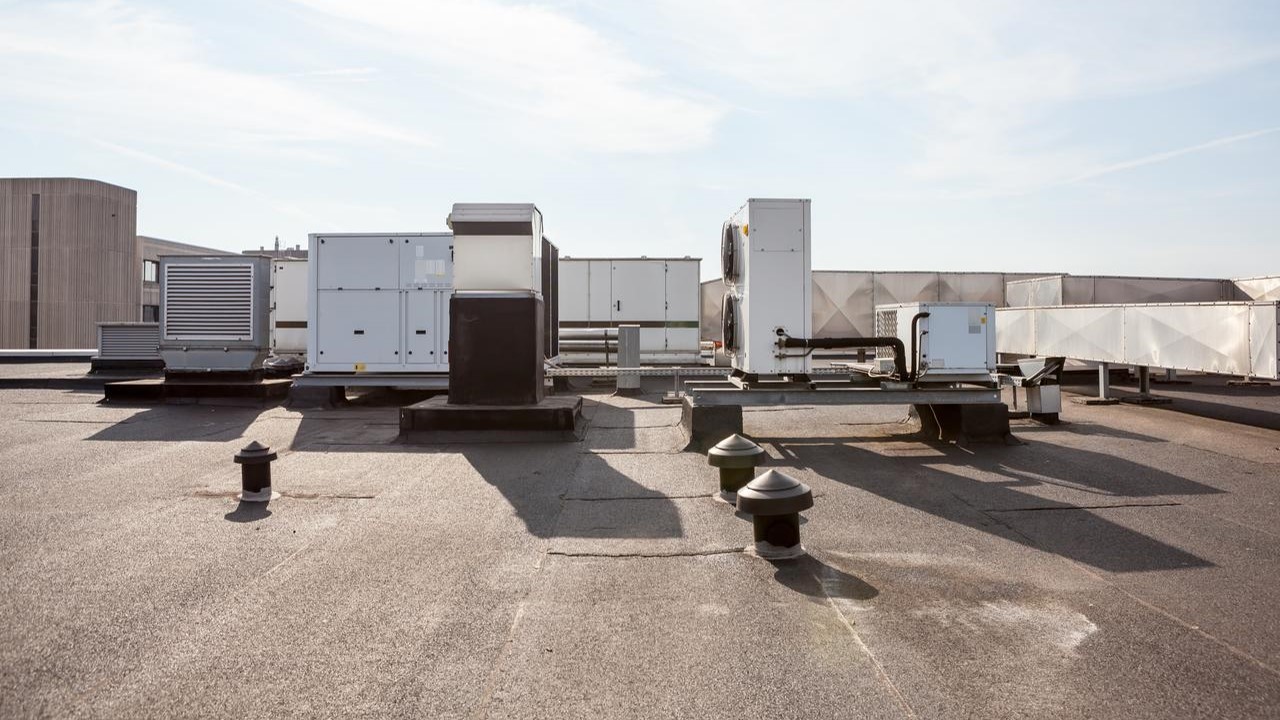
The next step in the roof inspection process is to examine the roof membrane. It is helpful to create a roof plan on which you can mark any problem areas for later repair or monitoring. Note the general appearance of the roof. Signs of blisters, alligatoring, or bare spots on ballasted or gravel roof surfaces should be repaired immediately. Include all roof mounted equipment such as HVAC equipment, ventilation fans, smoke vents, antenna, piping, and cables on your sketch.
Have hail or heavy rainstorm caused signs of impact-related damage that could jeopardize roof covering integrity? A qualified roofing contractor or engineer can verify potential damage.
Is there any evidence of standing water? Look for any debris that has accumulated on the roof such as ladders, paint cans, vegetation, tools, and equipment parts. Inspect the roof drains for obstructions to drainage. Address whether any physical damage has occurred to roof mounted equipment, or roof drainage components.
Any split, tears or punctures in the membrane need to be documented. Note if the membrane is properly adhered to perimeters and flashings. If mechanical fastening is provided make sure the fasteners have not backed out on any spots.
The most attention during the inspection should be spent on roof flashings, where many roof leaks originate. Start with an inspection of the perimeter flashings, being wary of whether the flashing material is appropriately attached at parapet walls. While at the roof perimeter, check the counter flashing for adequate attachment, noting the condition of the parapet wall itself.
The last roof area for inspection should be the penetrations in the roof field. This includes roof-mounted equipment, pipes, wiring, and expansion joints. Careful attention to damage caused by dropped tools, worker traffic, and vented liquids or vapours should be applied in these areas.
Be aware of whether new equipment has recently been installed, as it is common for no flashing to be installed when a new AC unit, ventilation fan, or antenna is placed on the roof.
Piping should be supported off of the roof with special supports which allow the piping to expand and contract without causing abrasion to the roof surface. Blocks of wood are not adequate piping supports.
Once the inspection is complete, you should make a list of the conditions noted as suggested in the checklist below, and begin creating a list of repairs to correct any deficiencies.
Connect With Us
For more information about protecting your business, contact your local Chubb risk engineer or visit us at www.chubb.com/engineering.
Buildings Department, HKSAR https://www.bd.gov.hk/
Insurance Institute for Business and Home Safety www.disastersafety.org/
Whole Building Design Guide www.wbdg.org/
Insights and Expertise

The future worker

Risk Bulletin Electrical Vehicle Parking and Charging Stations

Self drive on your business travel
Chubb property risk bulletin: Water damage risk management

Safe travel by air

Chubb risk bulletin - Reduced occupancy and premises shutdown
No part of this article may be reproduced in any written, electronic, recording, or printed form without written permission of Chubb.
Disclaimer - All contents of this article are intended for general information/guidance purposes only and not intended to be an offer or solicitation of insurance products or personal advice or a recommendation to any individual or business of any product or service. This article should not be relied on for legal advice or policy coverage and cannot be viewed as a substitute to obtaining proper legal or other professional advice, or for reading the policy documents. You should read the policy documents to determine whether any of the insurance product(s) discussed are right for you or your business, noting different limits, exclusions, terms and conditions apply in each country or territory, and not all cover is available in all countries or territories.